
The math doesn’t make sense—but the behavior does
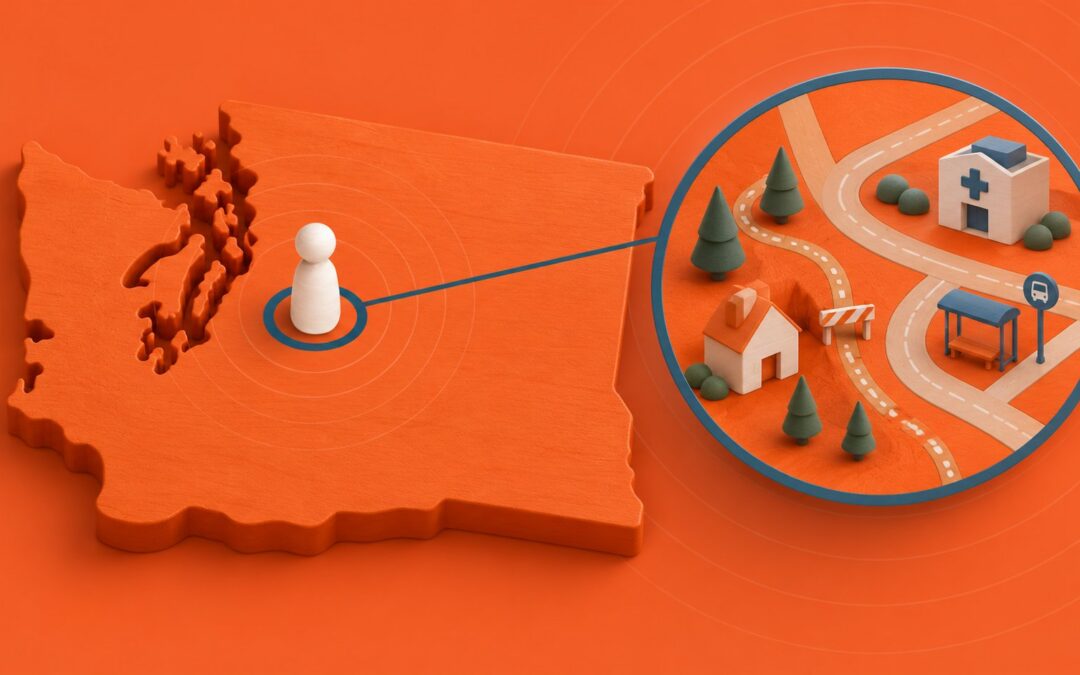
I now drive 15 minutes to go for a 20-minute walk. That’s a lot different than living in London, where walking was often just how I got somewhere: to the Tube, to the shops, to school, to work. But after moving to Bellevue, Washington, I’ve become much more aware of how much the places we live shape what we do—and how those surroundings can create opportunities and barriers to better health.
In London, walking wasn’t exercise—it was just getting places. Now I find myself driving to a trail for a brisk trek. Or, when I do brave an evening stroll in my neighborhood, the lack of sidewalks and streetlights means that I wear the sort of reflective jacket normally reserved for roadwork. It’s a far cry from London’s buttoned-up trenchcoat!
The behavior is the same. But the opportunity to perform the same activity is very different.
How Where We Live Shapes Health Behavior
This example is simple, but representative of how behavioral scientists like me understand actions and motivations around health. We spend a lot of time thinking about whether someone is inspired enough to do something, or whether they have the knowledge or skills to take next steps for their own good. We spend much less time thinking about where they are when they try. Sometimes, the environment around someone—the where—is just as important as the “what.”
Where you live shapes whether there is somewhere safe to walk, whether you can get to a grocery store or pharmacy, whether public transport is a realistic option, and how far you need to travel to get care. These conditions are part of what public health researchers call the social determinants of health.
Even something as ordinary as a sidewalk can change what fits into your day. The CDC describes how safe, connected walking routes can make it easier for people to get to everyday destinations on foot.
And then there’s how our surroundings shape more than what we can physically do. They also shape how we feel and what feels normal. As I explored in The Home as a New Frontier for Health, bringing medical care into the home can change how people feel about that space. Where we live shapes our social and emotional environment: who is around us, what we see other people doing, and what feels normal (like driving to go for a walk!). Our environment can affect whether exercise leaves us feeling better than when we left the house, and whether friends, family, or a community are nearby to make something easier or provide support when it isn’t. Long story short: Place can shape both what is physically possible and what feels socially possible.
These differences matter for health, too. Healthy People 2030 identifies neighborhood conditions as an important influence on health and well-being. The places around us can make some things easier and others harder, shaping what is accessible, what feels possible, and what becomes part of everyday life.
What Geography Can Tell Us About Barriers to Care
This matters when we think about personalization in healthcare. For me, the barrier is a 15-minute drive. For other people, it’s whether they can get there at all.
If someone isn’t attending an appointment, knowing that they have missed appointments before doesn’t tell us much about why. Maybe public transport is limited. Maybe the service is difficult to get to, or there are fewer services available locally. Maybe other demands are competing for their time. A missed appointment, on its own, doesn’t tell us how much someone cares.
We can’t know from place alone what is getting in the way. But alongside what we know about an individual, geographic information can give us another piece of the puzzle. It changes the questions we ask and helps us think more carefully about the barrier they’re actually facing.
Why Context Matters for Healthcare Personalization
That, to me, is where geography gets interesting for behavioral science and our work at Lirio. Geographic data is often used to show us where health problems occur. It can also help us explore why, by giving us more context about the environment in which someone is trying to take action.
For healthcare organizations, that means asking what would make the next step possible for this person, in this place. Another reminder may not help someone who can’t get to an appointment. Understanding that barrier gives us a better place to start.
At Lirio, this focus on individual barriers informs our healthcare behavioral intelligence platform. Geography can help us ask better questions about someone’s circumstances. We still need to understand what matters to them.
People aren’t their ZIP code. But behavior always happens somewhere. And sometimes the problem isn’t who someone is—it’s where they are.